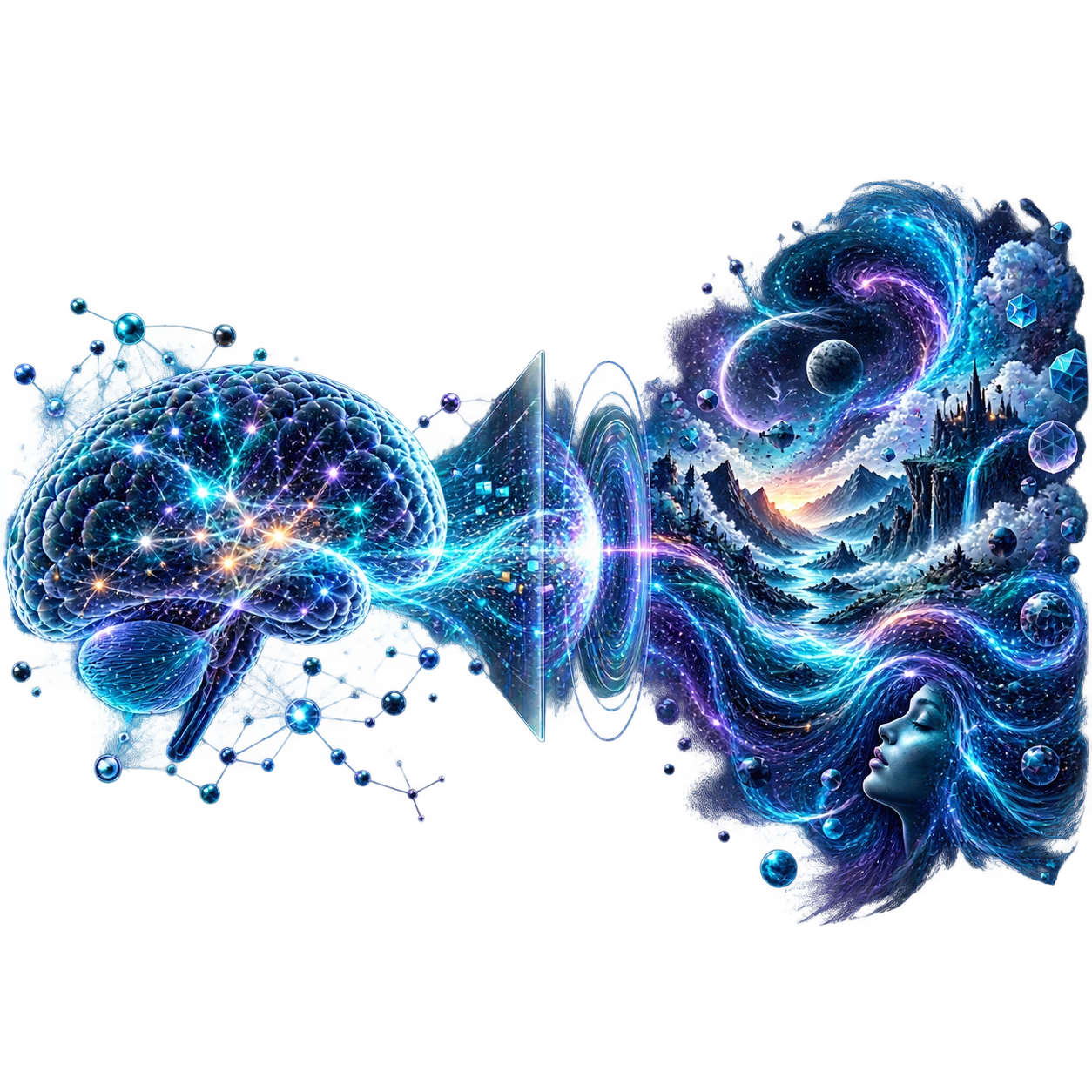
What Is the Hard Problem of Consciousness?
A thought experiment: the philosophical zombie
Imagine a robot built to perfectly copy human behavior. It flinches when you poke it and says "ouch." It cries during sad movies. It argues passionately about politics, falls in love, and tells you it's afraid of the dark. From the outside, in every conversation and every action, it is indistinguishable from a person.
Now ask: is there anyone in there? Is it actually feeling the pain it flinches from, or is it just running a very good program that produces pain-shaped behavior with nothing behind it?
Philosophers call this hypothetical being a "philosophical zombie," a system that behaves exactly like a conscious person in every measurable way but has no inner experience at all. It is a thought experiment, not a claim that such beings actually exist. Chalmers argues that if such a being is coherently conceivable, behavioral explanation may not automatically explain subjective experience. That inference is influential but contested, especially because philosophers disagree about whether conceivability establishes genuine possibility.
That gap, between explaining what a system does and explaining what it is like to be that system, is the whole hard problem in one sentence. It is often called the explanatory gap between physical brain processes and subjective experience.
Why it's called "hard"
Not because it's technically difficult in the way building a rocket is difficult. It's hard in a different sense: it might not be the kind of question that more data can answer.
Compare it to a question like "how does the brain let you hold a phone number in memory for ten seconds." That's genuinely hard, but it's the ordinary kind of hard. You can imagine the research program: find the neurons involved, trace the circuit, run the experiments, eventually get a mechanistic answer. Neuroscience does this successfully all the time.
Now compare it to "why does holding that phone number in memory feel like anything." Even if you had a perfect, complete map of every neuron involved, you'd still be able to ask: okay, but why does all that electrical activity come with a felt experience, instead of just happening, unfelt, in the dark? The mechanism and the mystery are two separate things, and no one has found a way to connect them.
What Are Qualia?
You'll see this word a lot in consciousness writing. Qualia (singular: quale) just means the raw felt qualities of experience: the specific redness of red, the specific sharpness of a headache, the specific taste of coffee. Not the information content ("this wavelength is 700nm," "this is caffeine"), but the raw what-it's-like quality riding along with that information.
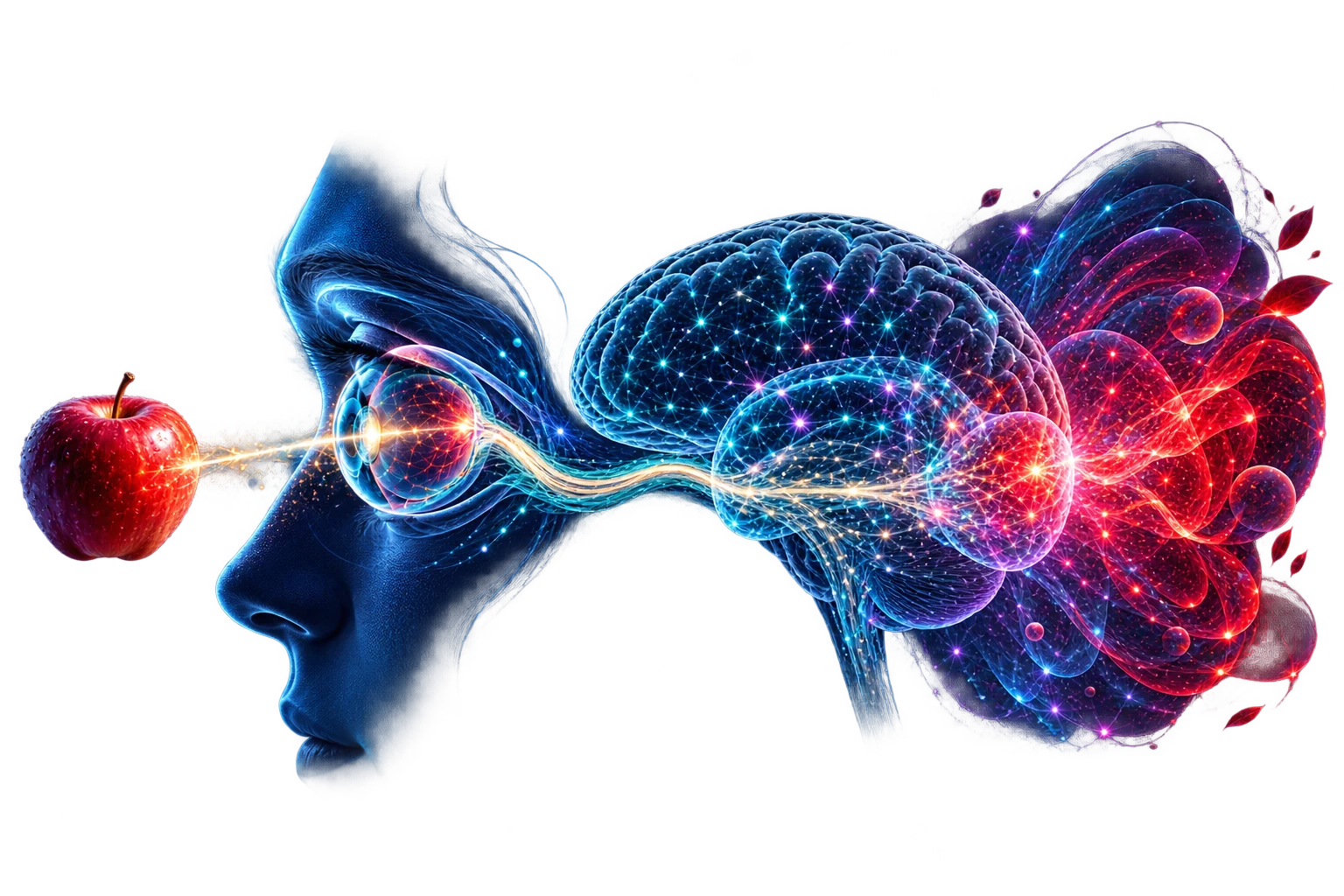
The hard problem, in more formal terms, is the question of why physical processes give rise to qualia at all.
This isn't a fringe idea
The hard problem is a major question in philosophy of mind and an important backdrop to consciousness science. The empirical theories in this guide address different aspects of consciousness, often focusing on mechanisms, access, integration, or conscious content rather than claiming to solve the hard problem itself. Some theories try to explain it. Some, like illusionism, argue the gap itself is a kind of cognitive illusion worth dissolving rather than solving. None of them have closed it to general agreement.
How it's different from the easy problems
Chalmers didn't just name the hard problem, he explicitly contrasted it with what he called the "easy problems": explaining attention, memory, the ability to report on your own mental states, the difference between sleep and wakefulness. These are genuinely difficult, unsolved-in-detail scientific questions. But they're easy in the specific sense that we know, in principle, what a solution would look like: a mechanism, a circuit, a computational process.
Confusing the two is the most common way conversations about consciousness go sideways. A brain scan that shows exactly which neurons light up when you see red is a genuine, hard-won answer to an easy problem. It is not, by itself, an answer to why that lighting-up is accompanied by redness rather than nothing.
| Easy problems | Hard problem |
|---|---|
| Functional and mechanistic questions | Subjective experience |
| Attention, memory, and report | Why processing feels like anything |
| Studied through experiments | No agreed complete explanation |
| Mechanisms can in principle answer them | The explanatory gap remains contested |
So is it actually unsolvable?
Genuinely contested. Some researchers think it'll eventually dissolve the way old "hard problems" in other fields did, once we have the right concepts (this is roughly the illusionist bet). Others think it's a permanent limit on what third-person science can explain about first-person experience, no matter how good our tools get. A few think the answer requires rethinking physics itself, treating experience as a basic ingredient of reality rather than something assembled from non-experiential parts (this is the panpsychist bet). No demonstration has settled it.
What's not contested: naming the problem clearly, in 1995, changed the field. It gave researchers a shared way to ask "does this theory actually address the hard problem, or does it just get better at the easy ones," which turns out to be the single most useful filter for evaluating any claim you'll read about consciousness, including every theory on this site.